The third National Summit on Journalism in Rural America will be held Friday, July 7, at the Campbell House hotel on US 68 in Lexington, KY.
Al Cross at the University of Kentucky is soliciting programming ideas al.cross@uky.edu

The third National Summit on Journalism in Rural America will be held Friday, July 7, at the Campbell House hotel on US 68 in Lexington, KY.
Al Cross at the University of Kentucky is soliciting programming ideas al.cross@uky.edu
 |
| Publisher Ellen Kreth |
 |
| Madison County (Wikipedia map) |
 |
| Gen. Mgr. Shannon Hahn |
 |
| Reporter Celia Kreth |
As more higher-education journalism programs try to serve community journalism, one professor who started a newspaper with her students, is doing hands-on research and testing a new business model at two weekly papers says it's way overdue.
 |
| Teri Finneman |
"Where the hell has the ivory tower been the last 20 years?" Finneman asked. "We are the ones who should have been leading the research, working with the industry, to avoid this mess that we are in right now. . . . It is time for the ivory tower to step up and support our counterparts in the industry."
Finneman is a researcher of journalism history, but she has launched into doing journalism with her students, as publisher of the Eudora Times in a small town nine miles from her journalism school, which will host "News Desert U." Oct 21-22 for journalism educators to address the crisis. "It is time for universities to step up, finally, and do something about this," she said.
This summer, Finneman is testing a new business model for community papers at Harvey County Now in Newton, Kan., and the Hillsboro Free Press, which will get $10,000 to participate. The model aims to get more revenue from the audience with e-newsletters, events and two tiers of memberships. Kansas Publishing Ventures, which owns the papers, is keeping detailed minutes of its weekly meetings on the project, to help develop an information packet for community papers across the nation, Finneman said.
The model is based on surveys that Finneman and other researches did in Oklahoma, Kansas, Nebraska and the Dakotas, which found that newspaper readers are much more willing to support their papers with money beyond subscriptions that newspaper publishers think they are. In North Dakota, the only state where she has released her results, 40 percent said they were likely or very likely to donate.
Finneman said she and her colleagues were "taken aback" at the attitude of publishers in focus groups who felt that asking for voluntary support would be admitting failure or showing personal weakness. "They very much saw themselves as a business, as opposed to an unreplaceable civic community organization that a newspaper is," while "leaving free money on the table."
She said publishers cited the lack of time and resources for business-model experimentation, but "Overall, there was very much this underlying fear, the fear of doing something different."
 |
| M. Clay Carey |
The summit's "research question" was "How can rural communities sustain local journalism that supports local democracy?" Carey said we need research that is centered on the idea of democratic practice, and the essential role of agency: the ability to act on information. He said research has focused on information at the expense of focus on agency, which many people feel they don't have, and suggested more specific research questions" How can journalistic organizations equip people to be civically engaged? How can they encourage and empower them? Perhaps by "inviting people to participate in sharing their story," he said.
More broadly, he said universities should ask, "How can news organizations facilitate collaboration that creates a sense of community and creates positive change?" and think about facilitating collaboration among local newspapers, national and regional organizations, and local entities such as libraries. He said universities can help create frameworks, and reduce risk and risk aversion. And all the while, do research that is "accessible to people outside the academy. . . . It's easy for research to be an extractive industry, in the same way that journalism can be an extractive industry."
 |
| Bill Reader |
Beyond research, some university journalism programs are trying to help individual papers and the industry at large. University of Georgia students staff The Oglethorpe Echo, a nearby paper that was going to close until retired chain publisher Dink NeSmith created a nonprofit and got the university involved (he described the process in the first Saturday afternoon session); and West Virginia University has the NewStart program to train the next generation of community newspaper owners. Its director, Jim Iovino, reported that the University of Texas is sending someone to see how it can emulate the effort. In both states, newspaper associations asked universities for help because newspaper owners could not find acceptable buyers for their papers.
Further reports on the National Summit on Journalism in Rural America will appear later on The Rural Blog. Previous articles were on the state of rural journalism the Summit-driven effort for sustainability in rural journalism and nonprofit models.
The National Summit on Journalism in Rural America is this Friday and Saturday (June 3-4).
It will be livestreamed. Details at https://www.nna.org/join-the-national-summit-on-journalism-in-rural-america-on-youtube-june-3-4
Elaine Godfrey, who grew up near the Mississippi River town of 24,000, writes for The Atlantic about The Hawk Eye under the new Gannett: "Its staff, now down to three overstretched news reporters, still produces a print edition six days a week. But the paper is dying. Its pages are smaller than they used to be, and there are fewer of them. Even so, wide margins and large fonts are used to fill space. The paper is laid out by a remote design team and printed 100 miles away in Peoria, Illinois; if a reader doesn’t get her paper in the morning, she is instructed to dial a number that will connect her to a call center in the Philippines. Obituaries used to be free; now, when your uncle dies, you have to pay to publish a write-up. These days, most of The Hawk Eye’s articles are ripped from other Gannett-owned Iowa publications, such as The Des Moines Register and the Ames Tribune, written for a readership three hours away. The opinion section, once an arena for local columnists and letter writers to spar over the merits and morals of riverboat gambling and railroad jobs moving to Topeka, is dominated by syndicated national columnists."
Using the recently created Burlington Breaking News Facebook page to solicit comments, Godfrey got dozens: "Readers noticed the paper’s sloppiness first—how there seemed to be twice as many typos as before, and how sometimes the articles would end mid-sentence instead of continuing after the jump. The newspaper’s remaining reporters are overworked; there are local stories they’d like to tell but don’t have the bandwidth to cover. The Hawk Eye’s current staff is facing the impossible task of keeping a historic newspaper alive while its owner is attempting to squeeze it dry."
Godfrey reflects, "When people lament the decline of small newspapers, they tend to emphasize the most important stories that will go uncovered: political corruption, school-board scandals, zoning-board hearings, police misconduct. They are right to worry about that. But often overlooked are the more quotidian stories, the ones that disappear first when a paper loses resources: stories about the annual Teddy Bear Picnic at Crapo Park, the town-hall meeting about the new swimming-pool design, and the tractor games during the Denmark Heritage Days. These stories are the connective tissue of a community; they introduce people to their neighbors, and they encourage readers to listen to and empathize with one another. When that tissue disintegrates, something vital rots away. We don’t often stop to ponder the way that a newspaper’s collapse makes people feel: less connected, more alone. As local news crumbles, so does our tether to one another."
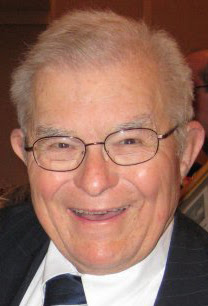 |
| Albert P. Smith Jr. |
 |
| Tim Crews of the Sacramento Valley Mirror held up a toothbrush outside a county jail after serving five days in 2000 for refusing to give up an anonymous source. (Photo by Rich Pedroncelli, The Associated Press) |
Crews died at 77 on Nov. 12 after a long illness and nearly 30 years as publisher and editor of the twice-weekly Sacramento Valley Mirror in Willows, a town of 6,000 and the seat of Glenn County, pop. 28,000. He was known for relentless open-records requests and for spending five days in jail in 2000 for refusing to reveal sources for a story he published about theft of weapons by a former California Highway Patrol officer.
Crews told the Poynter Institute in 2017 that his twice-weekly paper averaged more than 20 records requests a year, sometimes going to court fight for access. In 2013, a judge said his suit to force a school district to turn over 3,000 withheld emails from the superintendent was frivolous, and ordered him to pay $56,595 in attorneys' fees and costs when his income was 20,000 a year. An appeals court reversed the ruling, and that helped Crews earn the California News Publishers Association Freedom of Information Award. He also received the California Press Foundation’s Newspaper Executive of the Year Award in 2009.
As Crews fought battles for open government, he was known as "an old-time community journalist who stood up for regular people and published obituaries for free," The Associated Press reported after his death. "He dashed about the town of Willows, population 6,000, in red suspenders and with a bushy white beard, covering crime and politics but also community events."
"Tim Crews exemplified the best in rural journalism: broad community service that includes holding local officials and institutions accountable," said Al Cross, director of the institute and extension professor of journalism at the University of Kentucky. "We wish Tim had received the Gish Award while he was still with us, but we are still pleased to recognize his service."
 |
| Tom and Pat Gish at award announcement |
The Gishes, who died in 2008 and 2014, respectively, were the first winners of the award, in 2005. The other winners, in chronological order, have been the Ezzell family of The Canadian (Texas) Record; Stanley Dearman (former publisher, now deceased) and Jim Prince (publisher), The Neshoba Democrat, Philadelphia, Miss.; Samantha Swindler of Portland, Oregon, for her work at the Jacksonville (Texas) Daily Progress and the daily Times-Tribune of Corbin, Ky.; Stanley Nelson and the Concordia Sentinel of Ferriday, La.; Jonathan and Susan Austin, publishers of the now-defunct Yancey County News in Burnsville, N.C.; the late Landon Wills of the McLean County News in Calhoun, Ky.; the Trapp family of the Rio Grande Sun in Española, N.M.; Ivan Foley of the Platte County Landmark in Platte City, Mo.; the Cullen family of the Storm Lake (Iowa) Times; Les Zaitz of the Malheur Enterprise in Vale, Oregon; and last year, Ken Ward Jr., then of the Charleston Gazette-Mail and now of Mountain State Spotlight; his mentor, the late Paul J. Nyden of the Charleston Gazette; and Howard Berkes, recently retired from NPR.
Presentation of this year's award has been delayed by the pandemic and will be announced later.


 |
| Les Zaitz |
 |
| Tom and Pat Gish |

 |
| Art Cullen, left, and brother John hold award, after receiving it from IRJCI's Al Cross. |
 |
Times
photo: John, Mary Tom, Dolores and Art
Cullen.
|
 |
| Center for Innovation and Sustainability in Local Media map; click on it to enlarge |
 |
| CEO Mark Adams rarely speaks publicly about the firm he runs. |
 |
| Josh Qualls |
 |
| Gishes at award announcement, 2004 |
