Showing posts with label obituary. Show all posts

March 20, 2021

Al Smith, who co-founded Institute for Rural Journalism and Community Issues after weekly-newspaper publishing career, dies at 94

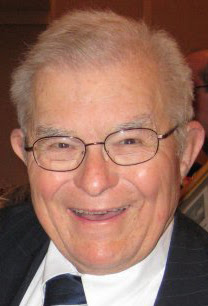
Albert P. Smith Jr.
Al Smith, who published weekly newspapers in Kentucky and Tennessee and co-founded the Institute for Rural Journalism and Community Issues at the University of Kentucky, died Friday, March 19 at home in Sarasota, Florida. He was 94.

From 1974 to 2007, Smith was the host and producer of Kentucky Educational Television’s “Comment on Kentucky,” the longest running public-affairs show on a PBS affiliate, taking leave in 1980-82 to serve as federal co-chair of the Appalachian Regional Commission for Presidents Carter and Reagan.

After selling his newspapers in 1985, Smith broadened his civic work. He and his friend Rudy Abramson, who died in 2008, thought up the Institute for Rural Journalism and Community Issues in the late 1990s, and he persuaded his onetime New Orleans intern, Hodding Carter III, to take it past the study stage with a grant from the John S. and James L. Knight Foundation, which Carter headed. He was chair emeritus of the institute’s Advisory Board. He was a charter member of the Kentucky Journalism Hall of Fame and a fellow of the national Society of Professional Journalists and former president of the Kentucky Press Association, a role in which he helped pass the state's main open-government laws.

Smith’s greatest legacy was the many people he helped along the way. He mentored younger journalists and others who crossed his path. He was a kind, generous man and a wonderful (if long-winded) storyteller, with a Shakespearean grasp of political foible and triumph. His curiosity was more than a journalist’s quest for a story; it was a wider curiosity that reflected his love for humanity and its condition. That quality brought him a wide circle of friends from all walks of life. That is reflected in this sidebar of remembrances and tributes on The Rural Blog, an Institute publication.

Two statewide awards are named for him. One is given by the rural-journalism institute and the Bluegrass SPJ Chapter for public service through community journalism (he was its first recipient); the other is a $7,500 award from the Kentucky Arts Commission, which he once chaired, to a Kentucky artist who has achieved a high level of excellence and creativity.

Survivors include his beloved wife of almost 54 years, Martha Helen Smith; his children, Catherine McCarty (William) of Birmingham, Ala.; Lewis Carter Hancock of Louisville and Virginia Major (William) of West Hartford, Conn.; an “adopted” son, Huaming Gu of Shanghai, China; and his sister, Robin Burrow, of Abilene, Texas. He is also survived by five grandchildren, Evan and Connor (Ikue) McCarty, Lauren Hancock, and Susannah and Ava Major; and numerous cousins.

A memorial service will be held at a later date. The family suggests instead that memorial contributions may be made in Al’s honor to the Institute for Rural Journalism and Community Issues, 343 S. Martin Luther King Blvd., #206 BLD, Lexington KY 40506-0012, and to The Hope Center.

July 11, 2014

RIP: John Seigenthaler, who appreciated courageous community journalists

John Seigenthaler
John Seigenthaler, who died today at his home in Nashville, was not a community journalist, at least in the traditional sense. But he was an exemplary and inspiring journalist, and he appreciated the contributions and sacrifices of rural and community journalists to the profession he loved and to the cause of open government, for which he crusaded.

In helping present the Tom and Pat Gish Award to the Ezzell family of The Canadian (Tex.) Record in 2007, Seigenthaler said, "I have never been among friends, among journalists, when I have felt more deeply touched by the emotion of being in the presence of people who have . . . committed their lives to tenacity, courage and integrity," the criteria for the award, given by the Institute for Rural Journalism and Community Issues.

"Weekly journalism is what this country was about at the beginning. Weekly publishers were people of courage, of integrity, and tenacity stood against authority, stood against community evils, against national evils, international problems, took strong positions, and that’s our legacy. That’s MY legacy, and I never worked for a weekly. . . . One place young journalists should be looking for employment, for jobs where there is confidence about a future, is in rural America, where I find less concern about the future than in daily journalism. . . .


 "It’s much easier for me, as a daily editor in a major city. There is much less danger of threat, much more chance that I have lawyers to protect me. There is much less likelihood that somebody will explode a bomb beneath my window of shoot into my plate-glass window or burn down our building, than for those who are in rural communities. And when I say I hope I have shown tenacity and courage and integrity, I can’t think of anything in my career that matches what must be those lonely days and nights when a lawsuit is threatened or danger is threatened, when life is threatened, in a rural community."

Seigenthaler concluded, "I think the tradition, the legacy, is best reflected today in rural journalism." For more of his remarks, click here. For his obituary, tributes and funeral information from The Tennessean, go here.

November 14, 2011

Les Anderson dies

A friend to many of us, Wichita State journalism professor Les Anderson has died.

It's truly a loss in journalism education. I was proud to call Les a friend. Last time he and I had seen each other for any amount of time was a few years ago at the Chicago AEJMC convention during a Tribune tour.

Les was a COMJIG member for a number of years.

Here is the Friends of Les Facebook page for more.

October 01, 2010

Obit for ordinary man shows community journalism at its best

This morning reading through my Twitter feed, I came across a link to an obituary for Neil Alan Smith, a 48-year-old St. Petersburg, Florida dishwasher. He had been killed coming home from work, the victim of a hit-and-run driver.

The St. Pete Times had an item about the death up on its web site, to which a reader posted the comment, "A man who is working as a dishwasher at the Crab Shack at the age of 48 is surely better off dead."

Not surprisingly, the Web editor deleted the mean-spirited comment. But that wasn't the end of this story. The Times decided that it needed to run a full obit to show the commenting troll was wrong, that every life does matter. The obit by reporter Andrew Meacham gives the background on the story and then starts the feature portion of it this way:

This much is certain about Mr. Smith: A number of people miss him.

He had a small but loyal network of co-workers and friends who are planning soon to celebrate his life.

They all describe Mr. Smith as steady and dependable. He rode his bicycle nearly 4 miles each way from the Hollywood Trailer Park on Fourth Street N to the Crab Shack on Gandy Boulevard, where he had worked for the past 10 years. In a business known for turnover, that is considered a long time.

The obit goes on to give as much of the story as could be told about Mr. Smith, a story about a part of our world that rarely makes it into the newspaper. And you know what? Mr. Smith had a more compelling story than anything else I've read in a long time.

Despite coming from a major paper in a big, urban area, this is, I think, true community journalism at its best. And it's reporting we can all do no matter where it is we work.

November 23, 2008

Community Journalism loses a hero

Tom Gish, the crusading owner of The Mountain Eagle, in Whitesburg, Ky., died Friday, Nov. 21, 2008, at the age of 82.


Gish and his wife, Pat, were among the heroes of community journalism celebrated in a COMJIG panel at AEJMC's national convention in Chicago last August.

Tom and Pat Gish bought The Mountain Eagle in 1956 and began operating it in 1957. In the Nov. 22, 2008, issue of the Lexington Herald-Leader, reporter Andy Mead wrote this about the Gishes:

"The Mountain Eagle became the first newspaper in Eastern Kentucky to seriously challenge the environmental damage caused by strip mining. The Gishes scrapped the paper's motto: 'A Friendly Non-Partisan Weekly Newspaper Published Every Thursday.' The new motto: 'It Screams.'

"The Gishes pried open the meetings of public agencies and took on corrupt politicians, rapacious coal companies and bad schools.

"They were respected nationally but made plenty of local enemies. In 1974, after the newspaper published stories about local police mistreating young people, an officer paid arsonists to throw a kerosene firebomb through a window at the newspaper, destroying the building. Mr. Gish said he later learned that coal company money was behind the crime.

"The paper came out on schedule the next week, published on the Gishes' front porch. It had a new motto: 'It Still Screams.'" Read more at http://www.kentucky.com/181/story/600788.html


The Gishes won numerous awards for their work. In 2004, the Institute for Rural Journalism and Community Issues headquartered at the University of Kentucky created the Tom and Pat Gish Award for courage, integrity and tenacity in rural journalism. They were the first recipients. Read more at http://www.ruraljournalism.org/


In addition to his wife, Mr. Gish is survived by his son Ben, who edits the paper, another son, three daughters, four grandchildren and one great-grandchild.


February 20, 2008

Rural Journalism loses a friend and champion

Many COMJIG members are familiar or involved with the Institute for Rural Journalism and Community Issues at the University of Kentucky, which is directed by active COMJIG member Al Cross. Earlier this week, Al sent us some bad news: Rudy Abramson, a nationally known journalist who helped start the IRJCI, died Feb. 13 from injuries suffered in a fall at his home in Reston, Va. Rudy was 70.

Rudy's professional chops are solid: He was a Washington reporter for the L.A. Times for three decades, his biography of American statesman Averell Harriman was critically acclaimed, and along with Jean Haskell he edited the very useful Encyclopedia of Appalachia. Most recently, he was working on a biography of Eastern Kentucky lawyer and author Harry Caudill, and he was active in efforts to prevent an amusement park from being built next to a Civil War battelfield.

For the IRJCI, Rudy was an enthusiastic champion of community journalism, particularly those editors in small towns who showed bravery, integrity, and tenacity in holding accountable the powers that be. Those who had the pleasure to hear Rudy's detailed and enthralling tales of brave community journalists at IRJCI functions will no doubt miss Rudy's storytelling skills.

A full obituary is currently on the front page of the IRJCI Web site, but I wanted to include here an excerpt of that obit, a quote from IRJCI co-founder Al Smith:

“Although he was always a big city reporter, Rudy never forgot his rural roots in northern Alabama,” said Al Smith, the Lexington journalist who co-founded the Institute with Abramson. “He was passionately concerned about environmental and economic problems in Appalachia. While writing stories about the region, he concluded that one major improvement might be to help local news folks do a better job covering the serious issues. That’s how we came up with the ideas for the Institute, which we sold to President Lee Todd at UK.”

I urge COMJIG members to keep our friends Al Cross, Al Smith, and others at the IRJCI in our thoughts as they mourn the loss of their friend, who was a true champion of community journalism.

A memorial service for Rudy will be held at the Freedom Forum's Newseum in Washington, D.C., at 11 a.m. Tuesday, Feb. 26.